Underbloom: a slow-burn portrait puzzle about underground networks
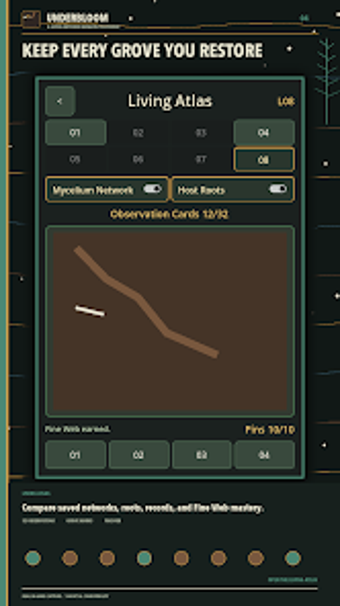
Grow living threads through hand-crafted soil cutaways using one-finger input, placing nutrient pins and triggering a Pulse to trace deterministic paths beneath storm-silenced groves. GarzaCore built this Android puzzle to reward careful planning rather than speed, pairing eight bespoke levels with ecological framing and offline play. Fans of atmospheric, methodical puzzles who prefer predictable mechanics and clear feedback will find its paced, contemplative challenges appropriate for short sessions or longer problem-focused play.
What kind of game places biology at its core?
Underbloom frames its puzzles around rebuilding mycorrhizal networks, so player choices map directly to ecological consequence: pins change nutrient flow and a Pulse grows threads along fixed routes. The core loop is reading a soil cutaway, identifying roots, hazards, and mycelium fronts, then placing limited resources before activating growth. That deterministic system, including a white preview of the next Pulse, removes guesswork and turns each decision into a concrete routing puzzle.
Does it offer different mechanics across levels?
Each of the eight handcrafted groves introduces distinct resource relationships rather than simple difficulty ramps, with mechanics such as nutrient sharing, moisture relays, and mold containment. Levels mark specific errors rather than resetting progress, preserving stable branches when a run ends. These design choices shift the challenge toward topology and planning instead of repetition or trial-and-error resets.
What does the game look, feel, and control like on mobile?
The interface targets portrait play with one-finger strategy controls, keeping interactions minimal and focused on placement and observation. Audio and visuals support an ecological mood without aggressive animation; a Reduce Motion accessibility mode replaces broad movements with readable static states. Offline playability means the experience runs without a persistent connection, making sessions possible anywhere on Android devices.
How steep is the learning curve and what keeps players returning?
Learning centers on understanding deterministic growth and the impact of each pin, so onboarding rewards careful reading more than reflex training. The non-punishing progression that preserves successful branches encourages iterative improvement across sessions. Replay value comes from the handcrafted puzzles' varied resource interactions and the satisfaction of finding an efficient network layout rather than random replayability or competitive modes.
Underbloom is best for patient, puzzle-focused players.
Underbloom suits players who enjoy deliberate, consequence-driven puzzles and clear, preserved progress. It is not aimed at those seeking fast-paced or reflex-dependent challenges. Choose it if methodical problem solving and an ecological theme appeal; skip it if you prefer quick-action or procedurally generated variability.